Free shipping
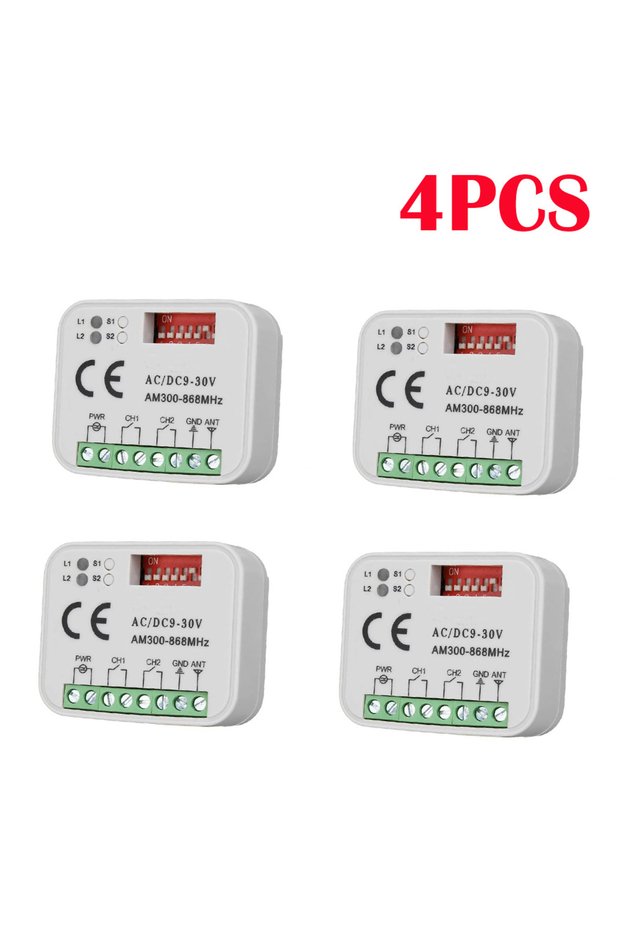
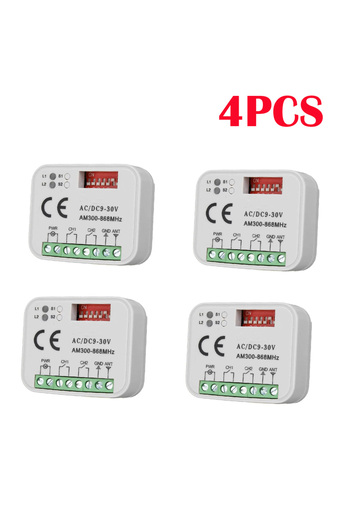
Choice 4PCS Universal Frequency 300-868MHz Rolling and Fixed Code & Learning Code Garage Door Remote Contro
No reviews yet.

Special Deals
125.5681.61SAR
Free shipping
Delivery address

Select your address, find out the delivery date!
Trendyol's commitments
Easy and free return in 15 days.
Payment methods





Highlighted features:
choice2 4PCS Universal Frequency 300-868MHz Rolling and Fixed Code & Learning Code Garage Door Remote Contro features
Instructions for Use/Warnings
*4PCS

Big Save Store
8.9
82.5K followers
Seller information
choice2 4PCS Universal Frequency 300-868MHz Rolling and Fixed Code & Learning Code Garage Door Remote Contro reviews
No reviews yet.
Product details
Additional info
- A maximum of 10 units of this product can be ordered. Trendyol reserves the right to cancel orders over 10 units.
- Barcode No: 3595593568333
choice2 4PCS Universal Frequency 300-868MHz Rolling and Fixed Code & Learning Code Garage Door Remote Contro features
Instructions for Use/Warnings
*4PCS
Safety information
Product safety information
Product description
Color:4PCS
Universal Frequency 300-868MHz Rolling and Fixed Code & Learning Code Garage Door Remote Control Receiver Controller
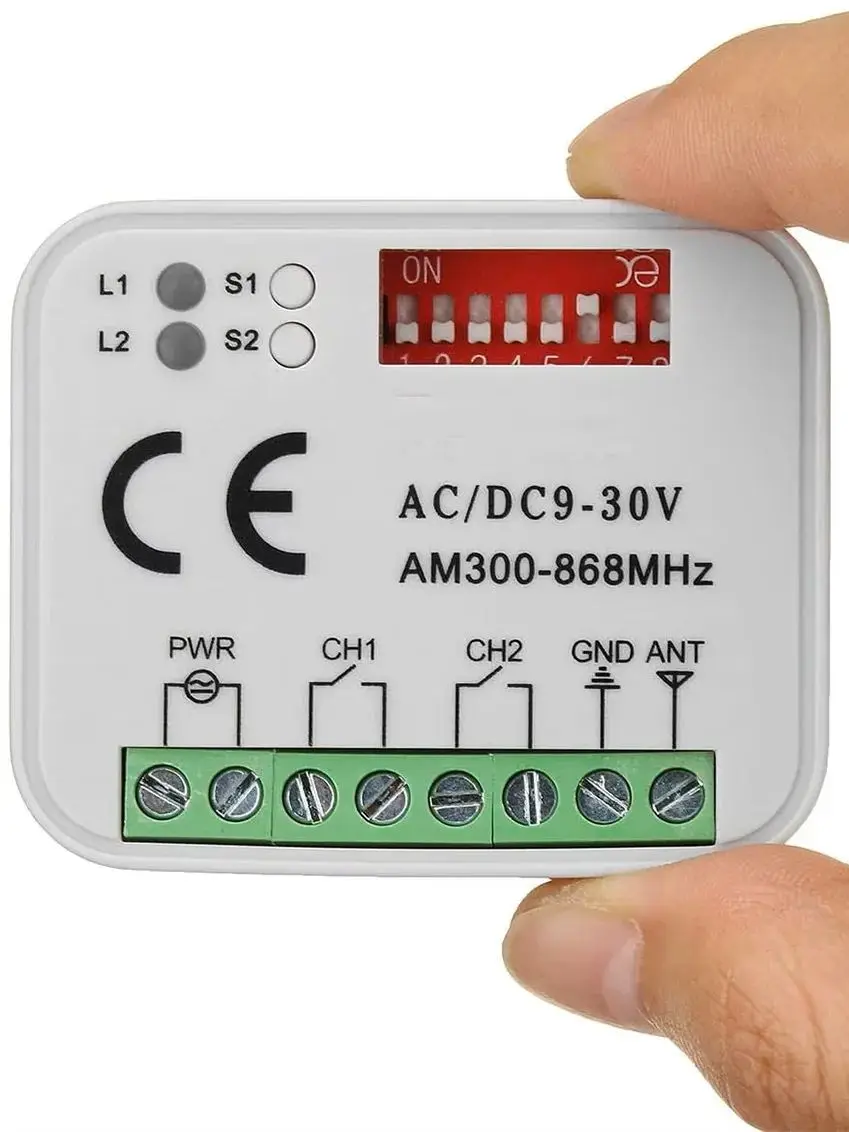
1)Name: Universal receiver
2)Operating Voltage: 9V-30V
3)Channel: 2.
4)Frequency: 300MHz - 900MHz.
5)Code: Rolling and Fixed code & Learning code.
6)Uses: Receiver is designed to control any gate automation system, burglar alarm system, electric doors, windows, lifting equipment, gateways, lifting devices. This is an easy to use, good looking, low power consumption and is easy to connect to your existing system.
Working frequency: 433mhz-900MHz(Rolling code & Fixed code)
300MHz
310MHz
315MHz
318MHz
390MHz
433.4MHz
433MHz
433.92MHz
868MHz
868.3MHz
868.8MHz
Can identify ALL Fixed code (2262, 2260, 2264, 5326, M1E, M5E and so on). All Learning code (1527, 2240, 6P20B, 6P20D and so on), Rolling code (HCS301, HCS300,HCS200, HCS201, HCS100, HCS101)
Feature:
1) Distance: 30-50 meters.
2) Very mini size: 5.5cm*4.5cm*1.0cm.
3) One receiver can work with 400 codes.
4) It don’t interference other remotes and receivers.
5) Brand selector: With 8 dip switches user can make different combination for different remote brands.
6) Power Input Selector: This receiver can work at AC/DC 9V~30V. However, it’s better to change the PIS according to the power input. If the input is great than 24V, shorten pin 2&3; shorten 1&2 if input less than 24V.